Screen for fit
Your health history, current symptoms, goals, precautions, and existing care are reviewed first.
Treatment & Rehab
Considering Dolphin Neurostim? Learn what Microcurrent Point Stimulation is, what the evidence supports, its limitations and whether another Lee Strength service may fit better.
Learn about Dolphin Neurostim
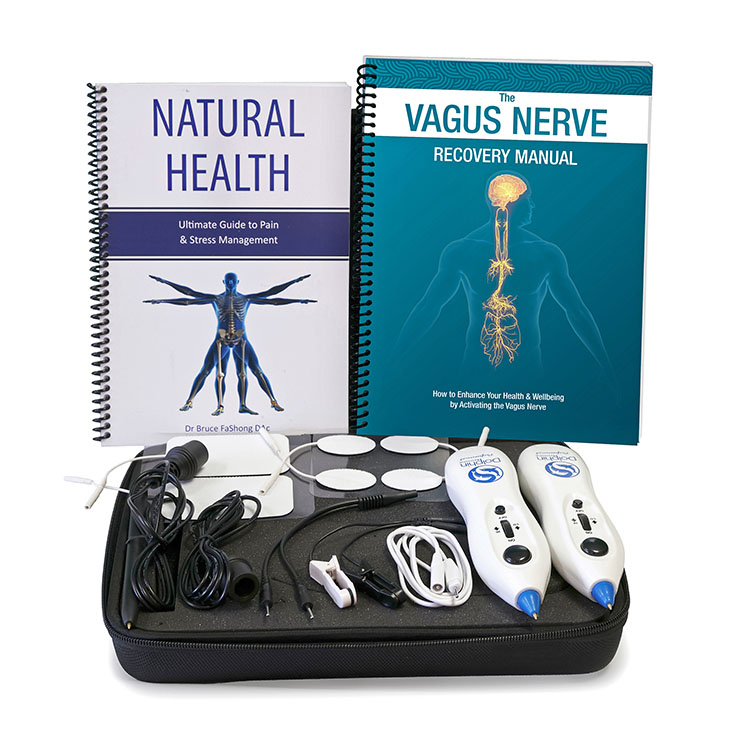
Dolphin Neurostim is a handheld, needle-free electrical-stimulation option used for Microcurrent Point Stimulation, or MPS. It applies brief, low-level stimulation through intact skin.
Steve uses it only after screening, with one specific symptom or activity selected for reassessment. A useful response may support continued use for that person, but it does not prove a diagnosis or tissue healing.
Read the manufacturer's device overviewIt may be worth discussing when a fully healed, medically stable scar remains sensitive or relevant to movement, when a selected muscle or soft-tissue concern is limiting activity, or when someone already receiving appropriate concussion care wants support for a specific neck or muscle symptom.
You do not need to choose the exact application before contacting Steve. He can help determine whether Dolphin Neurostim, RMT care, strength coaching, medical assessment, or another pathway is the more appropriate starting point.
Your health history, current symptoms, goals, precautions, and existing care are reviewed first.
Steve explains the proposed application, expected sensation, alternatives, and why the technique may or may not fit your goal.
The device is applied point by point. Sensation can include light tapping, tingling, or pinching, and intensity is adjusted to your comfort before the same symptom or activity is reassessed.
Areas people ask about
These descriptions are informed by Dolphin Neurostim's manufacturer-supplied website guidance and rewritten for Steve's current scope, the available evidence, and public-safety requirements.
Recent or suspected head trauma is always the highest safety priority because it requires appropriate medical assessment and concussion care, not because Dolphin has been shown to treat traumatic brain injury.
After urgent concerns are addressed, the Dolphin sequence Steve uses generally considers medically managed post-concussion symptoms first, then relevant fully healed scars, followed by the main pain, soft-tissue, or movement concern. Vagus nerve stimulation is considered afterward as a separate application rather than used simultaneously with those point-by-point treatments.

Recent or suspected head trauma takes priority because a concussion or traumatic brain injury needs appropriate medical diagnosis and follow-up. Steve does not diagnose concussion, clear someone to return to work or sport, treat traumatic brain injury, or claim that Dolphin Neurostim heals the brain.
When someone is already receiving appropriate care, a screened Dolphin trial may sometimes be considered for a specific neck or muscle symptom that is making sleep, walking, exercise, or rehabilitation harder.
Dolphin also publishes research about MPS applied to ear points used in Battlefield Acupuncture. The peer-reviewed study involved eight people with pain, not people being treated for concussion. It reported short-term changes in pain, stress, and several body measurements. It did not measure blood flow in brain regions.
Read where supportive care may fit after concussionManufacturer-hosted source: post-concussion case report on DolphinMPS.com.

For a fully healed scar, scar-focused MPS may be considered when local sensitivity, discomfort with touch or clothing, or reduced movement tolerance remains relevant to the person's goal.
A scar may be considered even when it is many years old, provided it is fully healed and medically stable. Age alone does not predict whether treatment will help. Orientation alone also does not create a reliable “horizontal is worse than vertical” hierarchy; location, symptoms, tissue health, movement, and the person's goals are more relevant.
Muscle strains, ligament sprains, and fractures involve different tissues and healing processes. They should not all be relabelled as surface scars or assumed to need a scar protocol. The term “scar release” does not mean that a scar is erased, adhesions are dissolved, or an internal restriction has been diagnosed. Open, infected, or incompletely healed tissue is not treated.
Read what treatment can and cannot changeManufacturer information: Dolphin scar-release page.
Fascia is connective tissue that surrounds and links muscles and other structures. “Fascial release” is a broad treatment label, not proof that one specific layer or body-wide chain has been corrected.
Within an eligible RMT treatment plan, Steve may use superficial or deeper soft-tissue techniques when assessment suggests they are relevant to pain or physical function. Any abdominal contact remains external, consent-based, and within Massage Therapy scope; it is not presented as treatment of an internal organ.
Gentle assisted stretching or active movement may follow when it helps reassess comfort or mobility. It should not be promised to make fascial work more effective for everyone. The useful question is whether the combined approach improves a meaningful movement and whether that change lasts.

Dolphin's ear clips deliver low-level electrical stimulation around the outside of the ear. Research on this type of stimulation is developing, but different devices and methods cannot be assumed to work the same way.
This is not an implanted medical vagus nerve stimulator. It is not presented as a treatment for nervous-system, inflammatory, or mental-health conditions. After screening, it may be considered as a needle-free trial tied to one clear symptom or activity.
In the Dolphin training model Steve uses, ear-clip stimulation is positioned after relevant medically managed post-concussion symptoms and fully healed scars have been assessed and, when appropriate, addressed. The proposed reasoning is that ear-clip stimulation may produce a better autonomic response when another relevant source of physical stress is not being overlooked. This is treated as a clinical sequencing hypothesis, not a guarantee or a rule that every person needs every step.
Small Dolphin studies reported short-term HRV changes after MPS was applied to Battlefield Acupuncture ear points and, in one post-concussion case report, after stimulation around scars and cranial sutures. These findings support further study of the proposed sequence.
They did not directly compare the complete sequence with ear-clip stimulation alone. They therefore cannot prove that treating post-concussion symptoms or scars first produces a larger or more durable HRV increase. Independent reviews of transcutaneous vagus stimulation have also reported mixed results or no reliable acute HRV change.
Sources: eight-person MPS–Battlefield Acupuncture pilot study, single-person post-concussion case report, and independent HRV meta-analysis.
Manufacturer information: Dolphin VNS page.

MPS may be considered for selected muscle or soft-tissue discomfort, including some concerns involving the lower back, neck, or shoulder. The goal is not to promise chronic pain relief. It is to see whether stimulation produces a meaningful change in pain, movement, sleep, work, or exercise.
Temporary relief can be useful when it helps someone move or take part in rehabilitation. It does not identify the cause of pain, prove tissue healing, or replace medical assessment and exercise when those are needed.
Manufacturer information: Dolphin pain-therapy page.
Frequently asked questions
No. It is an optional adjunct. Steve explains why it may or may not fit, the expected sensation, alternatives, and your right to change or withdraw consent at any time. Read how MPS may complement massage and progressive exercise.
No. Standalone Dolphin MPS is a separate, non-RMT service and is not eligible under Massage Therapy benefits. Some extended-health plans or health spending accounts may consider microcurrent electrotherapy eligible, but you must confirm directly with your insurer before booking. Reimbursement cannot be guaranteed.
No. It is not a diagnostic tool and no outcome is guaranteed. Suitability depends on your presentation, goals, precautions, preferences, and response.
Both deliver electrical stimulation through intact skin, but their applications differ. Neither should be chosen from marketing claims alone. Compare their practical differences and evidence.
Before treatment, you and Steve choose one symptom or activity to reassess. A response is useful only when the change is meaningful, lasts long enough to matter, or helps you move toward a wider rehabilitation or training goal. If you are unsure whether Dolphin Neurostim fits, Steve can help you choose the starting point. Read the detailed explanation.
Scar-focused techniques are considered only after the tissue is fully healed and after relevant screening. Open, infected, or incompletely healed tissue is not treated. Compare needle-based and needle-free options for a sensitive healed scar.
No. Dolphin’s ear-clip application uses external, low-level microcurrent near the ear. It is not an implanted medical VNS device and does not replace medical care.
Safety and sources
Dolphin Neurostim does not replace medical diagnosis, emergency assessment, concussion clearance, medication, or medically necessary treatment.
Educational disclaimer: This article provides general educational information only. It does not replace individual assessment, diagnosis, medical advice, or emergency care.
Steve does not assess, diagnose, clear, or treat concussion. New or worsening neurological symptoms, suspected concussion, progressive weakness, severe headache, loss of consciousness, or other urgent concerns require appropriate medical assessment. Referral and coordinated care are the right next steps when another professional is better positioned to manage the concern.
Research on MPS and related electrical-stimulation approaches is developing. Small or manufacturer-linked studies can inform a measured trial, but they do not prove a cure, universal benefit, or superiority over established care.
Dolphin research libraryManufacturer device overviewFees and next step
All prices are in Canadian dollars. HST is additional.
Location: Athlete Reset, North York.
Dolphin Neurostim may also be incorporated into a registered massage therapy appointment when appropriate, without an additional modality fee.